Medium to large breed dogs are affected most commonly.
Growth on roof of dog s mouth.
Assess your dog s risk.
They are usually firm smooth and similar in color to the gums.
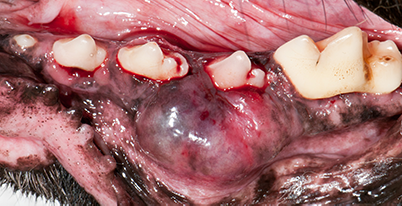
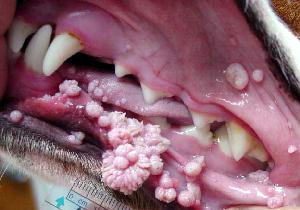
Oral masses malignant and benign in dogs.
Oral tumors in dogs are typically found on the roof of the mouth or around the gums but they can be located anywhere in the mouth.
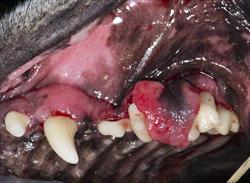
Epulides are growths that form between the dog s teeth.
Signs of epulides in dogs.
Often one big cause of alarm is a bump on the roof of the dog s mouth right behind the top front teeth.
Some describe this little lump as being diamond shaped and hard to the touch.
Malignant melanomas tend to appear on the lip gum and soft palate and also sometimes on the tongue itself.
Sometimes the growth is hiding under the tongue and can only be seen when the dog keeps the tongue to the side.
However according to the animal dentistry and oral surgery specialists llc in some cases it may swell as in the case of a malocclusion where the lower teeth puncture the roof of the mouth.
They tend to grow very quickly often involving the underlying bone and some varieties readily spread to other areas of the body.
According to veterinarian dr.
It can occur in any dog breed but most commonly in brachycephalic breeds i e breeds with a flat face such as boxers.
While not all growths masses are cancerous oral tumors can become malignant and fatal if they are not treated early and aggressively.
In a normal healthy dog there s a little lump that s located on the roof of the dog s mouth right behind the top two upper middle teeth which by the way are known as the incisors.
The growth can rarely occur in cats too.
Diagnostic tests are the most accurate way to determine the origin of the growth and to decide on the best plan of action.
Sometimes the lump is in the back of the mouth or on the roof of the mouth.
An oral mass refers to a growth in a dog s mouth or surrounding head region.
Oral tumors can be found in the dog s lips tongue gums and lymph regions surrounding the mouth.
A dog with an epulis may show one or more of the following signs.
Melanomas the malignant melanoma is the most common form of malignant growth in the mouth of the dog which develops due to an abnormal growth and division of the melanocyte cells.
Epulides are more common in middle aged dogs.
Normally a dog s incisive papilla doesn t give any problems.
If your dog s incisive papilla appears large see your vet consider your dog s breed though.
By learning your dog s risk of an epulis you can be more proactive in monitoring your dog s health and looking for any signs of malignant growth in your dog s mouth.
As long as the mass is small there are few clinical signs.
A growth in the mouth of your dog is defined as either malignant cancerous or benign noncancerous.